
Selling jewelry is not a single decision. It is a chain of small decisions that affect the number you hear at the counter, the risk you take on, and how you feel about the outcome afterward. Most people are not trying to become experts. They are trying to avoid two things, leaving money on the table, and walking into a situation where they feel pressured or talked down to.
This guide is built for real life. It walks through where you can sell in Chicago, what actually changes payouts, how to prep your pieces without accidentally hurting value, and where pawn fits into the decision. The goal is clarity. You should be able to read this, then walk into any jewelry shop chicago option, ask the right questions, and understand what the offer is based on.
What people actually mean when they say “Sell jewelry in Chicago”
Most sellers come in with one of three goals. They want the fastest cash, the highest payout they can reasonably get, or the least hassle. Those goals sound similar, but they lead to different choices.
If you are honest about the goal, the path becomes much easier. You stop comparing everything to everything else, and you start comparing options that fit what you actually want.
The three common goals, fastest cash, highest payout, or least hassle
Fastest cash usually means a local buyer who can evaluate quickly, make an offer on the spot, and pay immediately. For many people, that is where jewelry and pawn shops become relevant.
Highest payout usually requires time, more comparison, and sometimes a buyer type that specializes in a category, such as a jeweler who focuses on estate pieces, or a private sale if you are comfortable with the risks.
Least hassle usually means choosing a reputable local buyer, accepting a fair offer, and moving on. That option is often underappreciated. Your time, safety, and peace of mind matter.
The tradeoffs no one explains until after the offer is on the counter
Most regret comes from unclear tradeoffs. A higher payout might mean waiting weeks, dealing with consignment terms, or taking on the risk of meeting strangers. Faster cash might mean accepting a number that reflects the buyer’s immediate resale risk.
The right outcome is the one you can justify. That requires you to understand what drives the offer and what you are giving up in exchange for speed or convenience.
Where you can sell jewelry in Chicago, and how each option really works
Chicago offers multiple buyer types. They overlap, but they do not operate the same way. Knowing how each one makes money helps you predict how they will value your piece.
jewelry shop chicago, what to expect from traditional jewelers
A traditional jeweler may buy certain pieces outright, especially if they have a resale market for them, or if the piece has strong craftsmanship and design appeal. Jewelers are often more selective. Some primarily buy from existing clients, some only buy estate items, and some prefer consignment rather than immediate purchase.
If your piece is designer, has unique craftsmanship, or is in excellent condition, a jeweler can be a strong option. If the piece is primarily valuable for its metal content, you may get similar outcomes elsewhere, especially if you are selling as scrap.
jewelry and pawn shops, why pawn is often the fastest option
Jewelry and pawn shops are built for speed. A pawn counter evaluates daily, and the business model supports same day offers. That does not mean every shop is equal. But the structure often favors fast cash and clear transactions.
This is also where flexibility can exist. If you are not sure whether you want to sell permanently, a pawn option can allow you to borrow against the item instead.
pawn shop near me that buys jewelry, how local demand changes offers
Searching pawn shop near me that buys jewelry is a practical move, but location can affect your experience. Shops in different areas may see different inventory, different customer demand, and different resale patterns. Those factors can influence how confident a shop feels in making an offer.
The best approach is to choose shops that regularly handle jewelry, test in front of you, and explain offers without pressure. The more often a shop works with your category, the less guessing is involved.
Consignment and resale, when it makes sense and when it wastes time
Consignment can work when your item is desirable, priced realistically, and you can wait. The tradeoff is that you do not get paid today, and you may not know exactly when you will get paid. There can also be fees, commissions, and pricing adjustments over time.
Consignment wastes time when the item is unlikely to sell quickly, or when the store’s customer base is not the right match. If your goal is immediate cash, consignment is usually not the best fit.
Private sale, the upside and the risks most people underestimate
Private sale can produce higher numbers for certain pieces, especially if you find a buyer who wants that exact style or brand. The risks are real. You have to manage safety, scams, payments, and the possibility of disputes.
For many sellers, the risk and hassle are not worth the incremental payout. If you choose private sale, treat it as a structured process, not an informal meetup.
What affects your payout, the factors that change offers the most
Two pieces that look similar can receive different offers. That is not always a sign of unfairness. It is a sign that jewelry value is layered, and buyers price the layers differently depending on what they can resell.
Metal type and purity, why “gold” is not one category
Gold is not one thing. Purity, color, and composition affect value. A piece stamped with a karat mark is a starting point, not the entire story. A buyer will evaluate the metal content and confirm authenticity.
If most of your value is metal, these gold focused resources can help you understand how offers are framed.
Weight, condition, and craftsmanship, what buyers price immediately
Weight matters because it can be measured. Condition matters because it affects resale and repair cost. Craftsmanship matters when the piece has resale appeal beyond metal content.
A delicate chain with damage may still have metal value, but the repair risk may reduce resale value. A well made vintage piece in good condition may be valued for its design, not only for its melt value.
Diamonds, what drives value beyond “is it real”
Diamond value is not a simple authenticity test. Buyers consider size, cut, clarity, color, and how the stone is set. Small stones set into jewelry may be priced differently than loose stones because of removal and resale complexity.
If your question is still at the “is this diamond real” stage, start here.
Brand and style demand, when it matters and when it does not
Brand matters when buyers can resell the piece as a brand, with demand for that style. For many pieces, brand does not meaningfully change the offer because the resale market is driven by metal content and general design.
Style demand also shifts. A style that is popular today may not be as desirable later. Buyers price based on what moves now.
Paperwork, boxes, and certificates, how much they help in real life
Documentation can help, especially for higher value pieces, branded jewelry, and diamonds with certificates. Boxes and receipts do not magically increase value, but they reduce uncertainty and improve resale confidence.
If you have paperwork, bring it. If you do not, you can still get a fair evaluation, but you should expect the buyer to be more conservative.
How to prepare your jewelry before you get quotes
Preparation is not about polishing a story. It is about presenting your pieces clearly and avoiding mistakes that reduce confidence.
The right way to clean and present pieces without damaging them
Basic cleaning is fine, but avoid harsh chemicals or aggressive scrubbing. Do not attempt repairs at home. Do not try to alter settings or remove stones. If something is fragile, leave it as is and let the buyer evaluate condition honestly.
What to photograph and document at home
Take clear photos of each piece, front and back, including any stamps or markings. For pieces with stones, take close photos of the setting. If you have a certificate, photograph it as well.
This helps you track what you brought in, and it helps you compare offers accurately.
Separating sets, stones, and scrap, how to avoid a mixed bag offer
Do not dump everything into one pouch and ask for one number. Separate pieces by type. Group simple scrap items together if that is your intention, but keep higher value pieces separate so they are evaluated as items, not as bulk metal.
If you have a ring you might want to keep, keep it separate. Mixing it into a scrap pile is a common mistake.
How to describe your pieces without overselling or underselling
Keep descriptions factual. Say what you know. If you do not know the details, do not guess. A trustworthy buyer will test and evaluate. Your job is to provide documentation when you have it and be honest about condition.
Pawn shop jewelry, how pawn evaluations work and what you should ask
A pawn counter is often the fastest route to a clean offer. But the quality of the experience depends on transparency, testing, and documentation.
The difference between pawning and selling, same counter, different deal
Selling is permanent. You take cash, and the item is gone. Pawning is a loan against the item, with a redemption timeline and a total cost to get it back.
If you are unsure which option fits your situation, this decision guide can help.
What a professional test looks like, and what you should see
A professional evaluation is done in front of you. You should see basic testing appropriate for the material. You should see the piece handled carefully. You should hear a calm explanation of what matters.
If you feel shut out of the testing process, or if the item disappears into a back room and returns with a number and no explanation, that is a reason to pause.
How pricing is explained at a trustworthy shop
A trustworthy shop can explain the offer in plain language. You should hear factors like metal type, weight, condition, stone characteristics, and resale demand. You should be able to ask what would change the number.
Transparency is the difference between a fair offer and a stressful experience.
When a pawn shop is not the best buyer for your item
If your item is extremely specialized, high end, or requires a collector market, a different buyer type may make more sense. The same is true if you are willing to wait for a very specific resale channel.
That said, for many everyday jewelry pieces, pawn is a practical option because it is fast, local, and straightforward when the shop is reputable.
Jewelry from pawn shops, what buyers should know if you are shopping instead of selling
Not everyone visiting a pawn store is selling. Some people are looking for deals. Buying jewelry from pawn shops can be smart, but only if you approach it with the same clarity you would want as a seller.
How pawn inventory is priced, and why it is not “online cheap”
A pawn store is not a classifieds listing. Pricing reflects evaluation, overhead, and the ability to see the item in person. You may still find strong value, but it will not always match the lowest online listing you can find.
What to verify before buying, condition, sizing, and authenticity
Ask about condition, sizing, and what testing was done. Inspect clasps, prongs, and settings. Ask whether stones are secure. You are buying a wearable item, not just a shiny object.
When buying pre owned jewelry is a smart move
Pre owned jewelry can be a smart move when you prioritize value over buying new, or when you want a quality piece without paying full retail markup. The key is verification and choosing a shop that handles evaluation seriously.
How to compare offers without getting overwhelmed
You do not need a spreadsheet. You need a simple method that keeps you calm and prevents impulsive decisions.
The two quote rule, when it is worth the extra stop
If your pieces have meaningful value, get two quotes. The goal is not to chase the highest number blindly. It is to confirm you are in a reasonable range and to compare transparency.
If you are selling a small amount of scrap, one reputable quote may be enough.
What to write down so you can compare apples to apples
Write down the buyer type, the offer, what the offer is based on, and any terms. If one offer is a pawn loan, write down the total cost to redeem and the due date. If one is a purchase offer, note whether it is immediate or consignment.
Why the highest offer is not always the best deal
A higher number can come with pressure, vague explanations, or unclear documentation. The best deal is the one you understand and can defend. Clarity protects you.
The red flags that matter more than the number
If you feel rushed, if testing is hidden, if paperwork is unclear, or if questions trigger attitude, leave. A legitimate transaction does not require pressure.
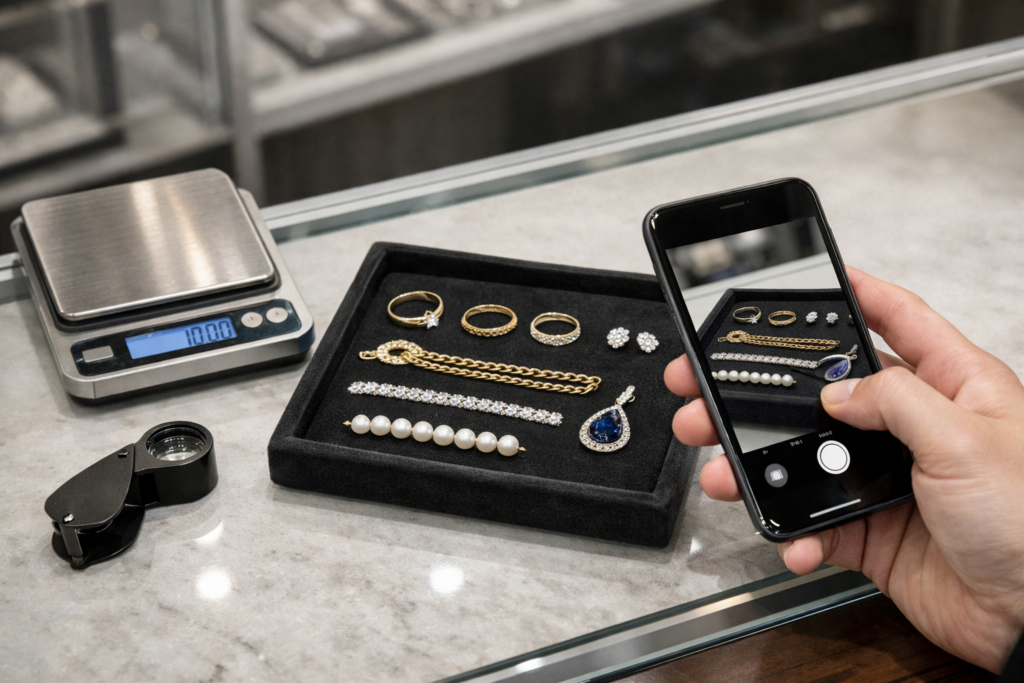
Pawnshop jewelry near me, choosing the right shop when you need cash today
Searching pawnshop jewelry near me usually means urgency. You can still make a good choice quickly if you follow a short list process.
A short list method that takes under 30 minutes
Pick two shops. Read recent reviews for patterns around fairness and transparency. Call ahead to confirm they evaluate jewelry and that testing is done on site. Then visit the shop that sounds calm and professional.
Timing and safety basics when you are carrying valuables
Go in daylight when possible. Park close. Keep items discreet. Avoid displaying jewelry outside. Your safety matters as much as the offer.
How to get a clean quote without pressure
Bring identification and documentation. Ask what factors drive the offer. Ask for clear terms if it is a loan. If you feel pressure to decide instantly, take that as a sign to slow down or leave.
Where pawn fits into the decision, and how to choose between options
Pawn is not always the answer, but it is often the right tool when you need cash and want flexibility.
If you want the jewelry back, pawn can be the right tool
If you want the option to get the piece back, a pawn loan may make sense. The key is understanding the total cost to redeem and the timeline.
If you do not want it back, selling is usually cleaner
Selling is often cleaner when you have no attachment to the item and you want the transaction finished. You get cash, and the decision is over.
The one decision question that clarifies your path
Ask yourself whether you would regret losing the item permanently. If the answer is yes, consider pawn. If the answer is no, selling is usually simpler.
Next steps, a simple plan for selling jewelry in Chicago this week
A good outcome comes from preparation and clarity, not from rushing.
Step 1, sort and document your pieces
Separate pieces by type and value. Photograph stamps and markings. Keep higher value pieces separate from scrap. Bring documentation if you have it.
Step 2, choose two buyer types that match your goal
If you want speed, include a reputable pawn option. If you want the highest potential payout and you can wait, consider a jeweler or consignment. Choose the buyer type based on your goal, not on a vague hope that every option will give the same outcome.
Step 3, get quotes and ask the same questions each time
Ask what factors are driving the offer. Ask how testing is done. If it is a loan, ask for the total cost to redeem and the due date. Compare clarity and documentation, not only the number.
Step 4, accept only the offer you understand and can justify
The best offer is the one you can explain to yourself the next day. If the process felt professional and transparent, you are far more likely to feel good about the outcome.
FAQ
How do I know whether my jewelry should be valued as an item or as scrap?
If the piece has craftsmanship, brand appeal, or a desirable style, it may be valued as a wearable item. If it is damaged, out of style, or primarily valuable for its metal, it may be priced closer to metal content. A trustworthy buyer should explain which lens they are using and why.
Should I clean my jewelry before taking it in?
Light cleaning is fine, but avoid harsh chemicals, aggressive polishing, or home repairs. The goal is to present the piece clearly without damaging it or raising concerns.
Will a diamond certificate change the offer?
It can, especially for larger stones and higher value pieces. Certificates reduce uncertainty. They do not automatically guarantee a specific payout, but they can support confidence in evaluation.
Is it better to get multiple quotes?
For meaningful value, two quotes are worth it. You are comparing not only the number but also the transparency of the process. For small scrap amounts, one reputable quote may be enough.
Can I pawn jewelry instead of selling it?
Yes, and it can be a good option when you want the possibility of getting the item back. The key is confirming the total cost to redeem and the due date before you sign anything.
What is the biggest red flag when selling jewelry?
Pressure and vagueness. If testing is hidden, explanations are dismissive, or paperwork is unclear, leave. A fair transaction does not require you to rush.
Closing, choose clarity and leave with an outcome you can stand behind
Selling jewelry is easier when you treat it like a structured decision. Know your goal, prepare your pieces, choose the right buyer type, and compare offers based on clarity as much as price.
If you want a fast, straightforward evaluation, a reputable pawn shop jewelry counter can be a practical choice. If you want to explore a pawn option with a clear understanding of terms, ask for a full explanation of the loan and what it costs to redeem.
If you want to visit Clark Pawners, bring your jewelry and identification, and ask the same questions you would ask anywhere else. You should leave with a clear explanation of the offer, the testing that supports it, and the next step, whether you decide to sell, pawn, or take time to compare.

