
If you are thinking about bringing something into a pawn shop, you probably want one thing first: a clear number. Not a vague answer. Not a runaround. Just a realistic sense of what you can expect and what you can do to walk out with a stronger offer.
Here is the straight truth: most pawn shop offers commonly fall somewhere around 30% to 60% of the item’s expected resale value, depending on what the item is, how easily it can be verified, and how quickly it can be sold. That range can climb higher for in demand, easy to authenticate valuables and it can drop for items that are risky, incomplete, or slow moving.
This article explains what percentage do pawn shops pay and why that number changes so much from one item to the next. You will also learn how shops price offers, what pushes you toward the top of the range, and what to bring with you so you do not leave money on the table.
Quick note on language: People often ask “how much pawn shop pay” as if there is one universal formula. There is not. But there is a repeatable logic behind most offers. Once you understand that logic, you can tell whether an offer is fair and how to improve it.
The short answer, then the real answer
A pawn shop’s offer is not based on what you paid. It is based on what the shop believes it can resell the item for after accounting for time, testing, overhead, and risk.
So when someone asks, what percentage do pawn shops pay, the honest answer is:
- Common range: about 30% to 60% of expected resale value
- Higher end: possible for high demand items that are easy to verify and sell
- Lower end: common for items that depreciate fast, are hard to test, or require repair
That percentage is not meant to insult you. It is how a resale business stays afloat. A shop has to evaluate the item, verify it, store it securely, and put staff time behind it. Sometimes the item sells quickly. Sometimes it sits. Sometimes it turns into a return or a loss. Offers reflect that reality.
How an offer is actually calculated
Most offers follow a simple logic. Different shops have different appetites for certain categories, but the underlying process usually looks like this.
1) Identify the item precisely
Two items that look similar can be priced very differently. A designer gold bracelet is not valued the same as a fashion bracelet. A laptop model from two years ago is not valued like the latest release. The first step is being precise:
- Brand and model
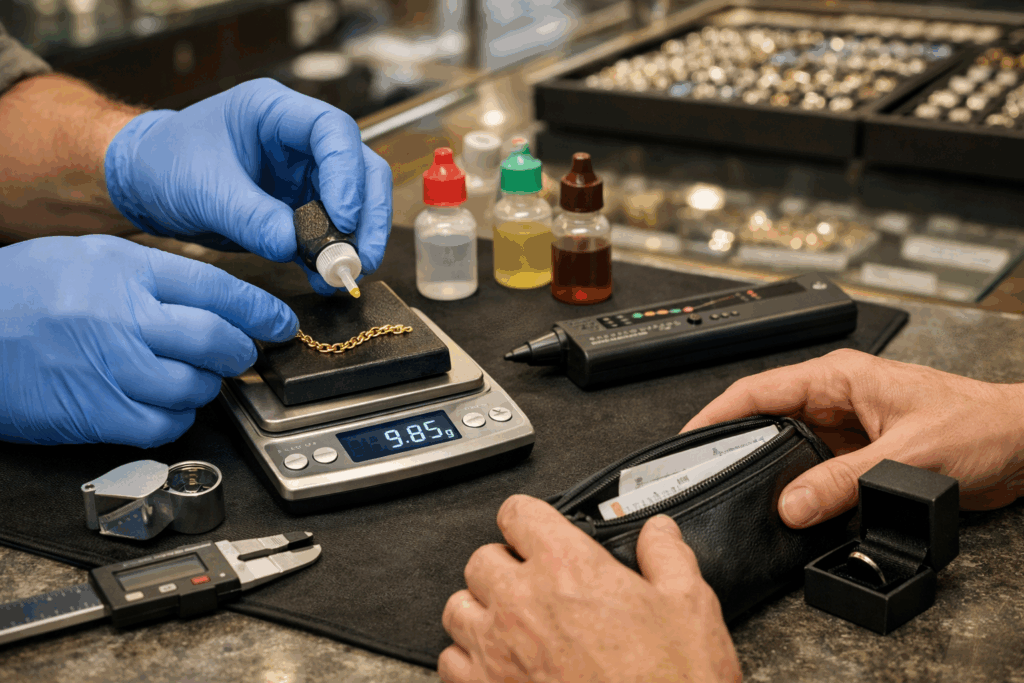
- Materials (gold karat, platinum, silver, gemstones)
- Serial numbers when applicable
- Specifications (storage size, generation, condition)
2) Verify authenticity and condition
This is where offers can swing the most. If an item cannot be verified quickly, the shop takes on more risk. That risk lowers the price. Common condition factors include:
- Wear and damage
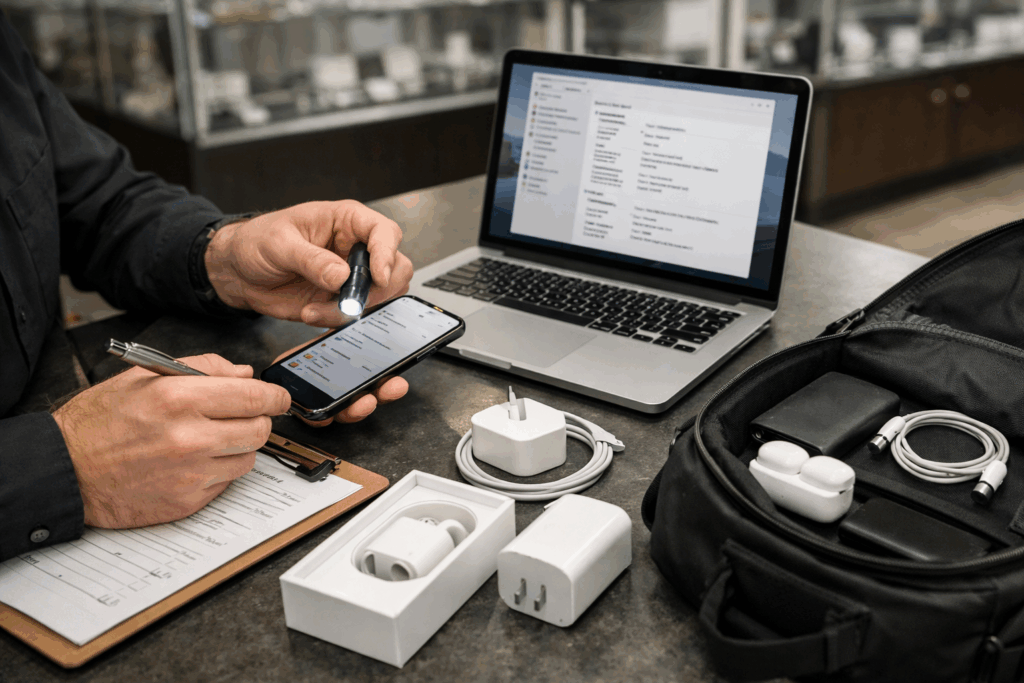
- Missing pieces or accessories
- Functionality (does it power on, does it hold a charge)
- Evidence of repairs or modifications
3) Estimate resale value
A shop looks at what the item realistically sells for in its market, not the highest price someone once asked online. Resale value depends on:
- Demand in the local area
- Seasonality
- Brand desirability
- Current market pricing
4) Account for costs and risk
This is the part most people forget. Shops factor in:
- Time to test and process
- Security and storage
- The chance the item sits unsold
- Price volatility (especially for electronics and some collectibles)
This is why the same category can have wide variation. A strong offer is not just about value, it is about certainty.
Why your payout percentage can change so much
If you have ever received two different offers for the same item, it is usually because the shop is not pricing the object, it is pricing the risk of reselling it.
Item category and how fast it sells
Some items move quickly and predictably. Others do not.
- Gold and certain jewelry: often easier to value and resell, especially when tested and verified
- Luxury watches and designer goods: can bring strong numbers when authenticity is clear
- Electronics: depreciate fast and vary based on condition and model
- Odd or niche items: may sit longer, which lowers offers
Condition and completeness
Two items with the same label can have different payout outcomes.
The difference between top range and low range is often:
- Original box
- Charger or accessories
- Extra watch links
- Receipts, certificates, or appraisals
An item that is complete is faster to evaluate and easier to sell.
Proof of authenticity
This matters more than most people realize. Documentation reduces uncertainty. For example:
- A luxury watch with a full set (box, papers, matching serial) is easier to price confidently
- Diamond jewelry with a lab report is easier to value than an unverified stone
No documentation does not mean you cannot get a fair offer. It means the shop may need more time and will price more cautiously.
Local demand and timing
Demand is not identical everywhere. A shop in downtown Chicago sees different buying patterns than a shop in a rural market. Timing also matters. Holiday seasons can increase demand for gift ready jewelry. Certain electronics sell better when a new model release hits because older models flood the market.
Sale versus pawn loan
A pawn loan is structured differently than an outright purchase. Some customers want to redeem their item. Some do not. That possibility can affect the terms and the offer.
Typical payout ranges by item
The ranges below are general, practical expectations for authentic items in sellable condition. Your final number depends on testing, condition, and local demand.
Common items and typical offer ranges
Gold jewelry
Typical offer range: 40% to 75% of expected resale value
What pushes it higher: clear hallmarks, higher karat, heavier weight, popular styles, proof of purchase
Diamond jewelry
Typical offer range: 30% to 60%
What pushes it higher: lab report, strong specs, clean setting, verified authenticity
Luxury watches
Typical offer range: 40% to 70%
What pushes it higher: full set, service history, serial match, high demand models
Designer handbags
Typical offer range: 30% to 60%
What pushes it higher: receipt or authenticity card, minimal wear, current styles
Smartphones
Typical offer range: 20% to 45%
What pushes it higher: unlocked, clean condition, no cracks, strong battery, no account locks
Laptops
Typical offer range: 20% to 45%
What pushes it higher: premium model, charger included, strong specs, clean screen
Game consoles
Typical offer range: 25% to 50%
What pushes it higher: current generation, controllers included, cables, working disc drive
Power tools
Typical offer range: 25% to 55%
What pushes it higher: pro brands, batteries included, tested, clean condition
If you are comparing shops, focus on who can verify and price the item confidently. The best offer is rarely the one that comes from guessing.
Unsure what your item is worth? Visit Clark Pawners for a free appraisal and a top dollar offer. When an item is valuable and in demand and we can verify it confidently, we often pay above average percentages.
How to get closer to the high end of the range
If you want a stronger offer, do not focus on clever negotiation lines. Focus on reducing uncertainty.
Bring anything that proves what it is
Documentation is leverage because it removes guesswork.
Bring what you have:
- Receipt or proof of purchase
- Certificates for diamonds or luxury goods
- Appraisals (even older ones can help as context)
- Serial numbers or model info
- Watch box, papers, and extra links
Make sure the item is complete
Missing accessories quietly lower offers because they lower resale confidence.
- Phones and laptops: bring the charger
- Consoles: bring cables and controllers
- Watches: bring extra links
Present it like you respect it
You do not need to polish something aggressively or risk damage. Just bring it clean and organized.
- Wipe fingerprints
- Untangle chains
- Make sure it powers on
Know what you want: sell or loan
If you want the most cash and you do not need the item again, selling can be simpler.
If you want cash but might want the item back, a pawn loan can make more sense.
Ask the right questions
A reputable shop should be able to explain the offer without defensiveness.
Good questions sound like this:
- Can you walk me through how you arrived at that number
- What would increase the offer, documentation, accessories, testing
If the answer is clear and consistent, you are usually dealing with a fair process.
Loan or sale: which is smarter
People often assume a sale always pays more. The truth depends on your situation.
Selling outright
- You exchange the item for cash
- You are done, no additional obligations
- Best for items you no longer want or use
Pawn loan
- You use the item as collateral and receive a loan
- You can redeem the item later based on the shop’s terms
- Best for items you want back, or items with personal value
If you are unsure, ask for both options. You may be surprised by how different the best choice feels once you see the numbers.
A quick example of why offers vary
Two customers walk in with a similar looking watch. Same brand, similar style. The first watch comes with a box, papers, and a service record. The second comes alone, with a worn clasp and no documentation.
Both may be authentic. But the shop has more certainty with the first watch. It can be verified faster. It can be presented and resold with less friction. That typically produces a stronger number and a better pawn shop offer percent.
The second watch might still get a fair offer, but the shop has to protect itself against uncertainty. That uncertainty does not just reduce the offer. It also reduces how quickly the shop can confidently move the item.
The point is simple: the highest payouts usually go to items that are easy to verify, easy to resell, and presented with proof.
Frequently asked questions
Do pawn shops pay 50%?
Sometimes. A 50% offer is more realistic for items that are easy to authenticate and have steady resale demand. High quality jewelry, certain luxury watches, and verified designer goods can land near that range when condition is strong. Items that are hard to test, incomplete, or slow to sell often come in lower.
Why do pawn shops pay so little?
The offer is based on expected resale value, not what you paid. The shop also accounts for testing time, secure storage, staff labor, and the risk that the item sits before it sells. When an item is hard to verify or likely to depreciate quickly, the shop prices that risk into the offer.
How much pawn shop pay for gold?
Gold payouts depend on karat, weight, condition, and how the shop is pricing it for resale. In general, tested gold jewelry often receives stronger offers than many other categories because the underlying material value is clearer. Bringing pieces organized and, when possible, with any documentation can help.
Do pawn shops pay more for brand name items?
Often, yes. Brand name items can be easier to resell, which reduces risk. When demand is strong and authenticity is clear, the shop can price more confidently. That confidence is what pushes offers higher, not just the logo.
Will I get more money if I have the box and receipt?
In many cases, yes. A box, receipt, or certificate is not magic, but it reduces uncertainty. That can shorten the time needed to verify the item and improve resale confidence. For luxury watches, designer bags, and high end jewelry, a full set can make a noticeable difference.
Is a pawn loan better than selling?
It depends on your goal. If you want cash and you do not need the item again, selling is straightforward. If you want cash but may want the item back, a pawn loan lets you borrow against it. Many customers choose a loan for items they are not ready to part with.
Can I negotiate an offer?
You can ask for a better number, but the best approach is to improve certainty, not to argue. If you have documentation, accessories, or proof that the item is authentic and in strong condition, bring it. A fair shop should be willing to explain what would increase the offer.
How do I know if an offer is fair?
A fair offer usually comes with a clear explanation. The shop should be able to tell you what they are valuing, what condition factors matter, and what risks are being priced in. If you leave understanding how the number was reached, that is a strong sign you are dealing with a reputable process.
Get a free appraisal at Clark Pawners
If you are tired of guessing online, bring your item in and get a real evaluation. Online prices are all over the place because most listings are not verified, not tested, and not local. A quick in store appraisal gives you clarity fast.
Unsure what your item is worth? Visit Clark Pawners for a free appraisal and a top dollar offer. If your item is valuable and in demand, we often pay above average percentages when we can verify it on the spot.
How pawn loans work in Chicago
Final takeaway
The best way to get a strong offer is not to chase a perfect percentage. It is to walk in prepared, reduce uncertainty, and choose a shop that can explain its pricing clearly. When you do that, you stop wondering what a pawn shop might pay and you start controlling the outcome.

