
Chicago has plenty of places that call themselves a pawn shop, but not every shop treats people the same way, prices items the same way, or explains the deal with the same level of clarity. If you are searching for the best pawn shops in chicago, you are probably trying to do one of two things. You either need cash fast and want a fair offer, or you want to buy something without overpaying.
This guide is written for the real decision you are making, which is how to choose a place that will be straightforward with you, document the transaction correctly, and give you a deal that makes sense for your item and your situation. You will not find hype here, and you will not find shortcuts that rely on guessing. You will find practical standards you can use to compare pawn shops in chicago, questions you can ask without feeling awkward, and a simple way to narrow down your options so you do not waste your day running from counter to counter.
If you want to dig deeper into value, pricing, and timing, you can also cross reference this guide with topics you may have already read on the site.
- Where to sell your gold in Chicago, 5 best options and why we pay top dollar
- How much do pawn shops pay for gold, insider guide to getting top dollar
- Top 10 items to pawn for quick cash and how much you can get in Chicago
- What percentage do pawn shops pay, getting the most for your item
Why people use pawn shops in chicago, and when it makes sense
Most people do not wake up excited to visit a pawn counter. They go because it solves a real problem quickly, and sometimes with fewer hoops than other options. A reputable shop can help you turn an item into cash without paperwork that follows you for years, and without a credit check.
The part that matters is choosing the right use case.
Common situations where a pawn loan fits better than selling
A pawn loan can make sense when you need short term cash but do not want to give up the item permanently. That is especially true for sentimental pieces, family jewelry, or higher value items you expect to get back. The trade off is simple. You get money now, you pay back the loan according to the terms, and you redeem the item.
This is often the better choice when the item is hard to replace at the same price, when you expect income soon, or when selling would create regret later. In a busy city, pawn shops in chicago also tend to be faster than personal loans, because the decision is tied to the collateral in front of the shop, not to your credit file.
If your item is gold jewelry, it helps to understand the difference between selling for value today and pawning as a temporary option.
When selling is the smarter move, and how to decide fast
Selling can be the better move when you are sure you do not want the item back, or when the loan terms do not match your reality. If you know you will not be able to repay in time, selling may keep you from losing the item anyway, but with less stress and fewer fees. Selling also makes sense for items that you replaced, upgraded, or simply do not use, like electronics you no longer want or jewelry that does not fit your style.
A fast way to decide is to ask yourself one question. If you had the cash in hand today, would you buy this item again at today’s prices. If the honest answer is no, selling is usually the cleaner path.
What a “good deal” actually means at a chicago pawn shop
People often talk about “getting a good deal” as if it is one number. In reality, there are two deals happening in the same building. One is the offer you receive when you bring an item in. The other is the price you pay if you are buying something from the display.
Understanding the difference helps you judge fairness without unrealistic expectations.
Fair payout vs sticker price, two different conversations
If you are pawning or selling, the shop is not paying you retail. A pawn shop is taking on real costs, including testing, staff time, storage, insurance, and the risk that an item may not sell quickly. A fair payout is an offer that reflects the item’s market demand, condition, and resale risk, while still giving you meaningful cash.
If you are buying, the sticker price includes those same costs plus a profit margin. That is normal in any resale business. A fair buying price is one that is competitive with other resale options, and backed by basic testing, transparency, and a return policy you understand.
How condition, brand demand, and resale risk change offers
Two items that look similar can have very different offers. A scratched watch with no box, no papers, and an unknown service history carries more risk than a clean watch with documentation. A laptop model that is already being replaced by newer versions carries more risk than one with steady resale demand.
Shops price risk. If a shop cannot confidently resell it, or expects it to sit, the offer will reflect that.
The difference between a fast quote and a careful evaluation
Some places glance at your item and throw out a number. That speed can feel convenient, but it may also signal that the shop is guessing, or that they are anchoring low to see if you accept quickly. A careful evaluation is not slow for the sake of being slow. It is a process that includes basic testing, a review of condition, and a moment to explain how the offer is being set.
When you are comparing chicago pawn shop options, pay attention to whether the evaluation feels like a real assessment, or a script.
How to compare pawn shops in chicago illinois without getting burned
It is easy to assume that all pawn shops follow the same rules. They do not. The smartest approach is to compare them by behavior, documentation, and transparency, not by marketing claims.
Licensing, receipts, and the paper trail you should expect
A legitimate shop should document the transaction clearly. You should be able to leave with a receipt or ticket that includes the item description, the amount, the terms, and your redemption information if it is a loan. If a shop is vague about paperwork, or tries to rush you through without letting you read, treat that as a warning.
The paper trail protects you as much as it protects them. In any pawn shop chicago il setting, you should expect the basics to be taken seriously.
Transparent pricing, what it looks like in real life
Transparency does not mean the shop explains every industry detail. It means they can answer reasonable questions without getting defensive. A transparent shop can tell you what they tested, what the key factors are, and what would change the number. You should hear specifics, not vague phrases.
If you are selling precious metals, a shop that is transparent should be comfortable explaining the difference between melt value and resale value, and how that impacts a quote.
Where to sell your gold in Chicago, 5 best options and why we pay top dollar
Staff behavior tells you everything, the questions a good shop asks
A good shop asks questions that indicate they are evaluating properly. They may ask about original purchase details, whether you have documentation, whether the item works, whether there has been a repair, or whether parts are missing. That is not interrogation. That is diligence.
A shop that barely looks at the item and only asks how much money you need is often focused on controlling the deal, not explaining it.
How to read reviews the right way, and what to ignore
Reviews can be useful, but only if you read them like an adult. Look for patterns, not one off stories. One angry review is not a verdict. Ten reviews describing the same problem, like unclear terms, rude staff, or pressure tactics, is information.
Also look for the opposite. Do reviewers mention clear explanations, fair testing, and professionalism. Those are more meaningful than generic praise.
pawn shops in chicago near me, how to choose based on location and convenience
Searching pawn shops in chicago near me is a practical move, but convenience should not be the only filter. Where a shop is located can affect your experience in ways people do not think about until they are in the parking lot holding valuables.
Neighborhood factors that affect pricing and inventory
Different areas have different demand. That can influence what a shop wants to buy and what it sells quickly. Some neighborhoods see more tool transactions, others see more jewelry, others see more electronics. A shop that regularly handles the category you are bringing in will usually evaluate it better and price it more accurately.
Parking, transit, and safety considerations that matter when you are carrying valuables
If you are bringing jewelry, coins, or high value electronics, plan your visit like you would plan any other errand involving money. Consider parking close to the entrance, daylight hours, and whether you can avoid walking long distances with items in a bag. If you use transit, consider a time that is calmer, and keep your item discreet.
Timing tips, when shops are busiest, and when you get more attention
Most shops get busiest around lunch, after work, and on weekends. If you want a careful evaluation and time for questions, go mid morning on a weekday if you can. You are more likely to get attention, and you are less likely to feel rushed.
What to bring so the process stays smooth and you do not lose leverage
People lose leverage when they show up unprepared. Preparation does not mean acting like an expert. It means bringing what supports your item’s value and reduces the shop’s uncertainty.
ID, proof of ownership, and anything that supports value
Bring your identification. If you have receipts, appraisal paperwork, certificates, or original packaging, bring those too. The goal is not to “prove” value in a dramatic way. The goal is to make it easy for a shop to evaluate and resell if needed.
Cleaning and prep that helps, and what can backfire
Basic cleaning helps presentation, but do not overdo it. Wiping dust off a tool or cleaning a fingerprint off a watch face is fine. Using harsh chemicals on jewelry or attempting home repairs can backfire and raise doubts about condition. If you are not sure, keep it simple.
Photos, serial numbers, and paperwork, when they change the offer
For electronics and instruments, serial numbers and model details matter. If you can provide the exact model and show it powers on, you reduce uncertainty. Documentation can also speed up the process, because the shop does not have to guess.
The items that tend to get the most consistent offers in a chicago pawn shop
Consistency usually comes from two things. The item has an active resale market, and it is easy to test authenticity and condition.
Gold and silver, what shops can price quickly
Precious metals are typically straightforward to evaluate when the shop has proper testing tools and experience. Weight, purity, and market pricing are measurable. That does not mean every offer will be the same, but it does mean the factors are concrete.
If you want more detail on how shops evaluate metals, the gold and silver content on the site can provide useful context.
Watches, jewelry, and diamonds, when you need a specialist
Watches and diamonds require more expertise. A reputable shop should test properly and explain what they are looking at. With diamonds, basic authenticity tests are not the whole story. Cut, clarity, and mounting condition matter. If your decision involves engagement rings, the pawn versus sell decision is especially important.
Tools, electronics, and instruments, what affects demand in Chicago
Tools and electronics can be strong categories, but the offer depends on working condition, completeness, and resale speed. A power tool without a battery, a console without controllers, or an instrument with damage will change the quote. Clean, complete, and working items tend to be evaluated more confidently.
For examples of common items people bring in and what affects offers, this related topic is worth referencing.
Niche items, when it is better to call ahead
If you have collectibles, specialty gear, or something unusual, call ahead. Not every shop wants every category. A quick call can save you a wasted trip and point you to a place that actually handles what you have.
Pawn shop chicago il pricing basics, how offers are calculated
If you want a fair deal, you need to understand what the offer is tied to. Most conflict comes from mismatched expectations, not from the math itself.
Melt value vs resale value, and why your item is not priced like a retail store
Melt value is what the raw metal is worth based on weight and purity. Resale value is what a shop can realistically sell the item for, after costs and time. A gold ring can have melt value, but it can also have resale value if it is a desirable style or brand. The shop chooses the pricing lens that matches the item and the market.
If your item is gold and you want to understand how offers typically relate to value, the site’s pricing content covers common misconceptions.
Why two shops can quote different numbers for the same item
Two shops might have different inventory needs, different customer demand, and different risk tolerance. One shop may already have too many similar items. Another may have customers asking for that category every day. They may also have different testing confidence, or a different resale channel.
This is why comparing pawn shops in chicago is not just about one quote. It is about the process behind the quote.
How to ask for a breakdown without sounding confrontational
You do not need to argue. You can simply ask, “Can you tell me what factors you used to arrive at that number.” A good shop will explain condition, demand, and testing. If they cannot explain, or if they act like you are offending them by asking, that tells you what you need to know.
Negotiation that stays respectful, and actually works
Negotiation is part of pawn culture, but it works best when it is grounded in reality. The goal is not to “win.” The goal is to reach a number you can justify.
The right way to state your number, and when to stop
If you have a number in mind, state it calmly and briefly. Then ask if they can meet it or get closer. If they say no and explain why, listen. If they say no without explanation, you can decide whether to continue or leave.
The worst negotiation approach is to bluff, threaten, or escalate. That usually reduces cooperation and does not improve your outcome.
What leverage you have, and what you do not
Your leverage is your ability to walk away, your documentation, your item’s condition, and the fact that you can get another quote. Your leverage is not a demand that the shop pay retail, or a claim based on what you saw online without considering condition and resale risk.
How to compare quotes without wasting your whole day
If the item is high value, it is worth getting two quotes. If the item is modest, your time matters too. Use a simple approach. Choose two reputable pawn shops in chicago, ask the same questions at both, and compare not only the number but also the clarity of the terms.
Loan terms in plain language, what you are agreeing to before you sign
The loan is where confusion can cost you. A fair offer does not help you if the terms are unclear or you do not plan for the timeline.
Interest, fees, and the timeline, what to verify on the ticket
Before you sign, verify the loan amount, the total cost to redeem, the due date, and what happens if you are late. Ask what fees are included and when they apply. You should leave with a clear written record.
Redemption rules, extensions, and what happens if you miss the date
Some shops allow extensions under specific conditions, some do not. Ask before you need it. If you miss the date, the item may become the shop’s property depending on the rules and the agreement you signed. Do not assume you have unlimited time.
How to avoid the most common misunderstandings
Most misunderstandings happen because people do not read the ticket and do not ask basic questions. Take sixty seconds. Read it. Ask what you do not understand. If a shop tries to rush you through, take that as a sign to slow down even more.
If you want a broader comparison between pawn loans and other short term options, there is a relevant guide on the site that can help you think through the trade offs.
Red flags you should not ignore, even if the offer sounds good
A tempting number can distract you from bad process. If you ignore warning signs, you may pay for it later through confusion, stress, or regret.
Pressure tactics, unclear receipts, and missing details
If you feel rushed, if the paperwork is unclear, or if the shop is vague about what you are signing, step back. You can always return later. A legitimate business does not need you to make a rushed decision.
Vague pricing explanations, and why that matters later
If the shop cannot explain the offer, you cannot judge whether it is fair. That matters because you may need to make decisions quickly, and a vague explanation puts you in a guessing game.
Shops that will not answer basic questions, what that usually signals
A shop that refuses to answer basic questions is not acting like a professional service business. You should not have to beg for clarity in a financial transaction. Walk away and choose another chicago pawn shop.
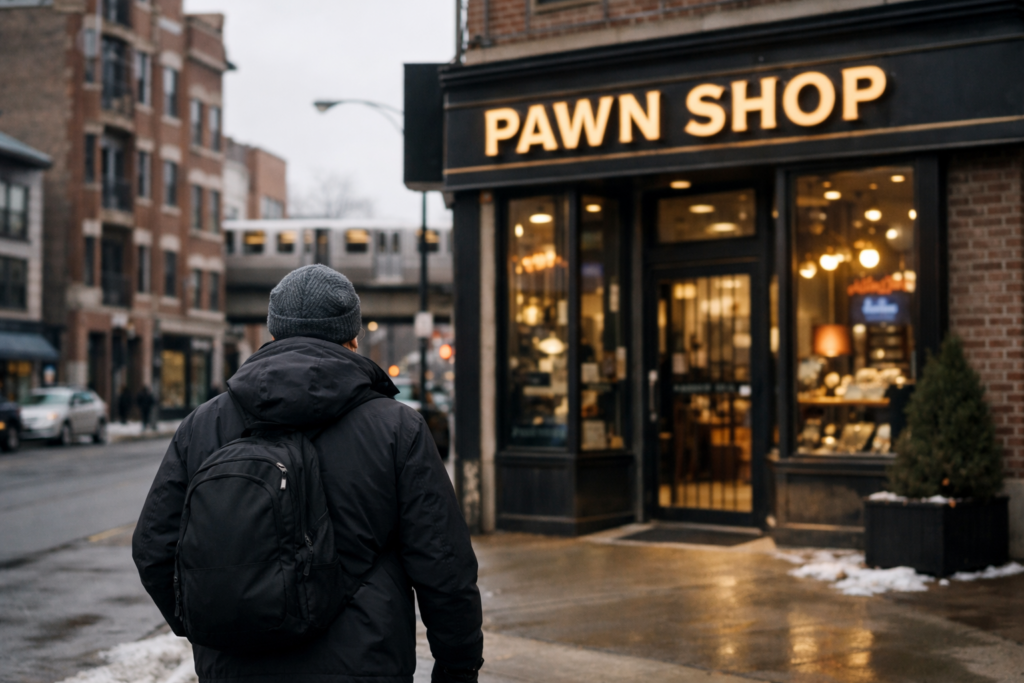
Best pawn shops in chicago, the checklist that separates the top shops from the rest
There are good shops in Chicago. The challenge is finding them without relying on luck. Use this checklist in person, not just online.
Clear communication, consistent process, and fair documentation
The best shops explain what they are doing, they are consistent, and they document the transaction properly. You should feel informed, not handled.
Clean evaluations, accurate testing, and professionalism
Professionalism shows in the evaluation. They test properly. They do not guess. They handle your items carefully. They speak plainly. They do not act annoyed when you ask reasonable questions.
Honest limits, when a good shop will tell you no
Sometimes the most trustworthy thing a shop can do is tell you they are not the right place for your item, or that your expectation is not realistic based on current demand. Honesty is a sign of a shop that plans to be around for a long time.
Chicago pawn shop short list method, how to narrow your options quickly
You do not need to visit ten locations. You need a short list, and a simple way to compare.
A five minute call script that reveals quality fast
When you call, keep it simple. Ask if they handle your category, ask what identification you need, and ask if they test on site. Listen to how they answer. A good shop will be straightforward and calm.
If the person on the phone is impatient or evasive, you just saved yourself a trip.
A simple comparison sheet you can use for offers and terms
Use a notes app. Write the shop name, the offer, the key terms, and whether the explanation was clear. Include details like whether they tested in front of you, whether paperwork was clean, and whether you felt rushed. That is enough to make a smart decision.
What to do if you are comparing multiple items at once
If you have multiple items, tell the shop up front. It helps them plan time and tells you whether they are equipped to handle a larger evaluation. If they seem overwhelmed, split the visits. Your goal is quality, not speed for its own sake.
Where Clark Pawners fits in, using the same standards as the rest of the list
A good guide should apply the same standards to every shop, including the one publishing the guide. The point is not to crown a winner with empty claims. The point is to show you what a high trust process looks like, and invite you to judge it for yourself.
What a trust first process should look like from the moment you walk in
You should be greeted like a customer, not treated like a problem. The staff should ask what you are trying to do, which is pawn or sell or buy, and then explain what happens next. If you are bringing valuables, discretion matters. A professional environment keeps the conversation calm and focused.
How evaluations, pricing, and paperwork should be handled
A reliable process includes proper testing, a clear explanation of what influences value, and paperwork that matches what you were told verbally. You should be given time to read and ask questions. You should not feel pressured to decide on the spot.
If your visit is primarily about gold or jewelry, these related guides can help you understand what you should expect to be explained during the evaluation.
The easiest way to get a clean quote, and what to bring
Bring your identification, bring any documentation, and bring the item in the condition you actually own it in. If it is jewelry, do not try to “upgrade” it at home. If it is electronics, bring chargers and accessories. The cleaner and more complete the presentation, the easier it is to get a quote that reflects real resale value instead of uncertainty.
Next steps, a quick plan for getting the best deal this week
If you want to act quickly, the goal is not to rush. The goal is to move with a plan.
If you are pawning today, a pre visit checklist
Bring your identification. Bring documentation if you have it. Know whether you can realistically redeem within the timeline. Read the ticket before you sign. If anything is unclear, ask. If the answers are vague, leave and choose another option among pawn shops in chicago.
If you are selling today, how to prepare and compare offers
Prepare the item, gather documentation, and get two quotes if the item is meaningful value. Compare not only the number but also the transparency. Then choose the shop that gives you a fair offer with clear explanations and clean paperwork.
For gold sellers who want to compare options across the city, this guide is relevant.
If you are unsure, the one decision question that clarifies the path
Ask yourself whether you would regret losing the item permanently. If yes, explore a pawn option. If no, selling is usually the simpler path. If you are on the fence, take five minutes to read a decision focused guide before you walk in.
FAQ
How do I know if a pawn shop is giving me a fair offer?
A fair offer is one the shop can explain. Ask what factors they used, such as condition, demand, and testing results. If the explanation is clear and matches what you see in your item’s condition and documentation, the offer is easier to judge. If the shop cannot explain, you cannot evaluate fairness.
Should I pawn or sell if I need money fast?
Pawn if you want the option to get the item back and you are confident you can redeem within the timeline. Sell if you do not want it back, or if the repayment terms will be stressful. The right choice depends more on your ability to redeem than on the item itself.
Do I need paperwork or receipts for jewelry and watches?
You do not always need paperwork, but it can help. Boxes, receipts, certificates, and service records reduce uncertainty and can support a stronger offer, especially for higher value pieces.
Why do offers differ between pawn shops in Chicago?
Offers differ because shops have different demand, different inventory needs, and different risk tolerance. One shop may be able to resell your item quickly. Another may expect it to sit. The best way to compare is to ask for the reasoning behind the number.
What should I read before I sign a pawn loan agreement?
Read the loan amount, the total cost to redeem, the due date, and any fees. Make sure you understand what happens if you miss the date and whether extensions are possible. If you do not understand a term, ask before signing.
Closing, how to choose with confidence and move forward
A good pawn experience in Chicago is not about luck. It is about selecting a shop that treats the transaction like a real financial decision, with clear evaluation, clean paperwork, and straightforward communication.
If you are ready to compare your options this week, start with two shops, ask the same questions at each, and choose the one that explains the offer clearly and documents the deal properly. If you want a clean, no pressure evaluation at Clark Pawners, bring your item and identification, and come in at a time when you can take a few minutes to review your options and ask questions. You should leave understanding exactly what you were offered, why, and what your next step is, whether you decide to move forward today or not.

